We believe informed homeowners make confident decisions. That’s why we’ve created this resource center to guide you through every stage of your roofing project. From understanding how to choose the right contractor to knowing what to expect during installation and beyond, our goal is to provide clear, practical information that helps you protect your home and invest wisely.
We believe informed homeowners make confident decisions. That’s why we’ve created this resource center to guide you through every stage of your roofing project. From understanding how to choose the right contractor to knowing what to expect during installation and beyond, our goal is to provide clear, practical information that helps you protect your home and invest wisely.
1. Licensing & Insurance
Ensure the contractor is fully licensed and insured to protect you. At Miley Roofing, we’re a licensed contractor, we’re fully insured, and we guarantee our work.
2. Proven Experience
Look for a team with a strong track record in your region and with the kinds of roofs you have. We’ve served Central Idaho since 1992, specializing in everything from asphalt shingles and composite shakes to metal roofs and below-grade waterproofing.
3. Quality Materials & Affiliations
Make sure the contractor works with trusted manufacturers and maintains relationships with the best in the business. At Miley Roofing, we pride ourselves on long-standing industry relationships and delivering high-quality roofing systems.
4. Warranty & Guarantee
You want to work with someone who stands behind their work. We guarantee our workmanship and back up manufacturer warranties as well.
5. Communication & Transparency
Your contractor should explain the process, timelines, and responsibilities clearly. At Miley Roofing, we meet with you in the planning phase so your project is executed smoothly.
6. Local Knowledge
Conditions in Central Idaho, such as snow load, wind, metalwork, and waterproofing, are unique. Our local expertise means your roof is built for the environment it lives in.
Our Workmanship Standards
At Miley Roofing, excellence isn’t optional. It’s our standard. Here’s how we deliver it.
Licensed, Insured & Certified
We are licensed contractors, covering both residential and commercial roofs, and fully insured so you don’t carry the risk.
Skilled Crew + Proven Methods
From waterproofing below grade to performance roofing systems above grade, we use proven methods, quality materials, and skilled craft to deliver roofing systems built to last.
Quality Materials & Craftsmanship
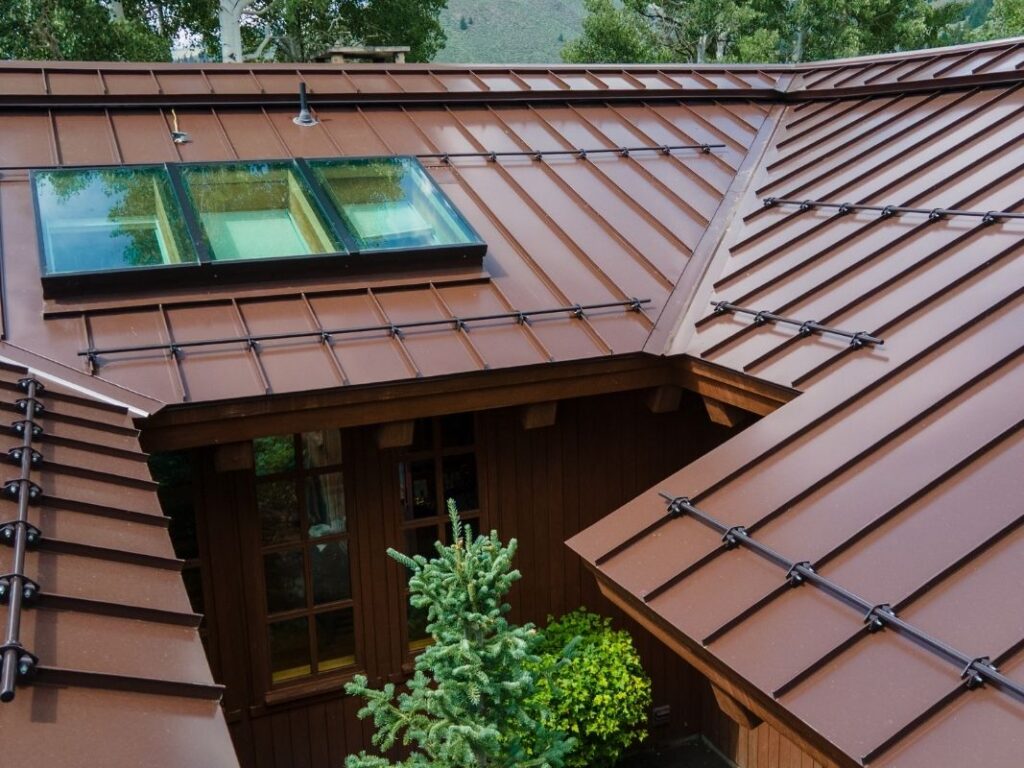
We source top-quality materials and pay attention to the details, including metal flashing, standing seam precision, high-performance weather barriers, and proper ventilation and drainage. Our “Our Work” gallery shows the many fine-featured roofs we’ve built.
Guaranteed Work & Manufacturer Support
We guarantee our workmanship and partner with the best manufacturers so product warranties are fully backed. If something is off, we fix it. We don’t walk away.
Clean Jobsite, Respect for Your Home
We treat your property like our own. We clean up at the end of each day, inspect for stray nails or debris, and make sure your driveway, landscaping, and home entrance are respected throughout the job.
Local Focus Built for Our Environment
Roofing in Central Idaho means addressing snow loads, steep slopes, wind, waterproofing needs, and custom metal work. Our local experience means we account for all of that and deliver a roof that meets it.
Roof snow retention is the use of devices, such as snow guards or fences, to hold snow and ice in place on a roof, allowing it to melt gradually rather than sliding off all at once. These systems prevent dangerous "roof avalanches" that can damage the roof, gutters, landscaping, and property, or cause severe injury to people below.
Roof ventilation is a specialized, balanced system designed to keep the roof deck cold to prevent ice dams, while allowing moisture to escape to avoid mold and rot. It uses specialized ridge vents with snow filters, paired with soffit intakes, to maintain airflow that resists fine, drifting snow from entering the attic.
A roof deck is the structural surface that supports the roofing system. Roof decking, or sheathing, is the foundational layer of plywood, OSB, or planks fastened over rafters to support roofing materials. It provides structural integrity, with common thicknesses being 5/8 or 7/16 inch. Signs of damage include sagging, water stains, and soft spots; delamination can occur due to moisture and often requires replacement.
Pipe boots, also known as pipe flashings or pipe jacks, are vital waterproof seals installed on roofs to prevent water from entering around pipes, such as plumbing vents, HVAC, or exhaust pipes. Composed of rubber (EPDM/neoprene), plastic, or metal, they fit tightly around the pipe and integrate with shingles to shed water.
In snowy climates, the best roof underlayment is a self-adhered, rubberized asphalt membrane, commonly known as "ice and water shield," which prevents leaks from ice dams and seals around nail penetrations. It is crucial to install this membrane at least 2 feet past the interior wall line, in valleys, and around chimneys. Synthetic underlayment is recommended for the rest of the roof, as it remains pliable and won't become brittle in extreme cold, unlike traditional felt paper.
A chimney cricket (also known as a roof cricket or saddle) is a small, peaked, triangular structure built onto the roof on the "uphill" or high side of a chimney. Its primary job is to divert water, snow, and debris away from the back of the chimney. Without a cricket, the flat back wall of a chimney acts like a dam, causing water to pool and debris (like leaves) to accumulate.
The primary function of a roof drip edge is to prevent moisture from infiltrating beneath the row of shingles closest to the roof’s eaves. This channels water away from the fascia into the gutter. Without a drip edge, precipitation can seep behind the gutters, running down the fascia into the soffit boards. This results in water damage to wooden structures and roofing underlayments, negatively impacting the roof’s lifespan. In severe cases, water may infiltrate the attic or walls, causing internal damage.
Additionally, a properly installed drip edge protects against adverse weather conditions. Winds can force precipitation under the lowest row of shingles, which can damage and even loosen shingles. Effective water flow is also imperative to prevent the formation of ice dams during the winter months. Plus, sealing the gap between the roof edge and fascia prevents insects and pests from establishing annoying and potentially damaging habitats.
Roof flashing is a durable sheet metal (usually galvanized steel or copper) installed at joints and intersections, such as eaves, rakes, chimneys, walls, valleys, and vents, to create a watertight seal. Its primary purpose is to direct water away from vulnerable, porous areas to prevent leaks, water damage, and roof deterioration.
Step flashing is an L-shaped metal component (usually galvanized steel or copper) used to seal the joint where a sloped roof meets a vertical wall, such as dormers or chimneys. It consists of individual, overlapping pieces woven between each shingle course to direct water away from the wall and down the roof.
Headwall flashing is a vital L-shaped sheet metal component (usually galvanized steel or copper) installed where the top (upper end) of a sloped roof meets a vertical wall, such as a dormer or chimney. It prevents water from entering the roof-to-wall joint by directing water over the shingles and down the roof surface.
A roof diverter, commonly called kick-out flashing, is a specialized piece of flashing installed at the lowest point where a sloped roof meets a vertical wall (like a dormer or sidewall). It acts as a spout to divert water away from the wall and directly into the gutter, preventing water from running behind siding and causing leaks.
Metal valleys use exposed W shaped metal flashing for superior durability and water shedding in high-precipitation areas and harsh winter climates, while California-cut valleys (a type of closed-cut) use overlapping shingles favored for speed and warmer climates. Metal is more durable and lasts longer, whereas California cut is faster to install but may wear out faster and be prone to leaks in snowy climates.